
The Ancient Orthodox Secret to Trusting God
Trusting God sounds simple until life becomes unstable. It is easy to speak about faith when things are calm, but...
Read More →
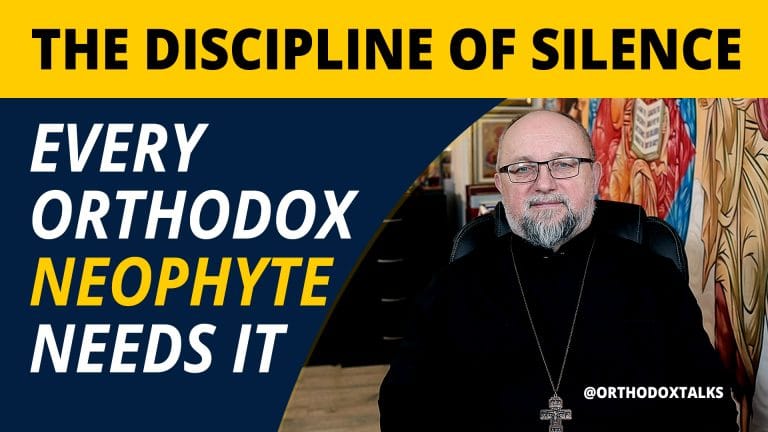
In my previous post, we touched on the three common mistakes that newcomers to the Orthodox faith often make. Today, I want to dive much deeper into the very first point we discussed: the importance of silence. Whether you are a newly baptized “neophyte,” a catechumen preparing for entry into the Church, or even a cradle Orthodox Christian who is just beginning to take your spiritual life seriously, silence is the most powerful tool in your arsenal. Without it, your zeal can actually become a leak in your spiritual bucket, draining away the very grace you are trying to cultivate.
It is natural to feel your heart on fire when you first enter the Church. The theology is deep, the liturgy is beautiful, and everything finally makes sense. Your first instinct is likely to tell everyone about it, to witness to your friends and relatives, or perhaps to jump into debates on social media about complex theological distinctions. But if you were to go to a wise, experienced priest and tell him about this fire, he might offer you what sounds like cold water: “Be silent.” This doesn’t mean you have no right to speak; it means resisting the urge to teach others before you have gained the humble experience of truly living the faith.
The danger we face is a form of spiritual gluttony. Just as physical gluttony is the misuse of food for pleasure rather than health, spiritual gluttony is the pursuit of study, prayer, or service for the emotional satisfaction and praise it provides rather than for communion with God. When we correct someone online about a theological point, we get a rush of feeling “advanced,” but we are actually eating the praise of men rather than the bread of heaven. Saint Isaac the Syrian famously said that silence is the mystery of the age to come. If we are constantly outputting—talking, typing, and debating—we leave no room for input. We become like a cup turned upside down; no matter how much grace is poured out, nothing stays inside because we have no room to receive it.
As a novice, what you have are mostly books and ideas, but what you likely lack is the experience of the Cross. Silence is how we make room for that experience to take root. By practicing silence, we are effectively starving our ego. We are telling our pride that we don’t need to be the smartest person in the room or be “in the know.” This is especially important when you see a lifelong parishioner doing something that seems to contradict a book you just read. Resist the temptation to correct them. That person may have a simplicity of heart that is worth more than a thousand PhDs. Silence allows you to see the person sitting next to you rather than just focusing on their mistakes.
In our modern, fast-paced world, practicing this “fast of the tongue” can be difficult. We are used to instant replies and constant communication. To help, I often recommend the twenty-four-hour rule: if you see something online that you feel needs an Orthodox correction, wait a full day before responding. Usually, by the next morning, you’ll realize the world survived just fine without your comment, and if you still choose to speak, you will do so with a much humbler heart. Another helpful practice is to simply tell friends who ask deep questions that you are still a student and would prefer to ask your priest for the answer. This kills the “expert persona” instantly and keeps you grounded in humility.
Finally, when you are at a service, try to let the words wash over you rather than analyzing the choir’s performance or the reader’s mistakes. Let the liturgy analyze you instead. When you finally stop the loud talk of “zeal without knowledge,” you will begin to hear the small, still voice of the Holy Spirit. You will start to hear the needs of the people standing right next to you in church. As Saint Ambrose of Milan said, “I have often regretted my speech, never my silence.” Silence is not a sign of weakness; it is a sign of a soul that is serious about the long, slow work of theosis. Do not be in a rush to be a teacher. Be in a rush to be a repentant student.
Welcome home, and let’s get to work—in silence.
You can watch the full video on this topic here: The Discipline of Silence